Gunite Guide
Why Gunite Pools Survive Houston Hurricanes, Freezes, and Clay Soil
July 14, 2026 · 8 min read
If you own a pool on the Texas Gulf Coast, three things test it that most of the country never thinks about: expansive clay soil that moves under the pool, hard freezes like the one in February 2021, and hurricane season every summer and fall. We have built and repaired gunite shells across Houston to Beaumont for more than 20 years, through Harvey, through Uri, through Beryl. Here is the honest engineering of what fails and what holds.
The real enemy is the soil, not the storm
Greater Houston sits on expansive clay. When it rains the clay swells, when it dries out in a Texas summer the clay shrinks, and that cycle moves everything built on it. It is the same force that cracks house slabs and driveways all over the region. A swimming pool is a large, rigid structure sitting in that moving ground, so the soil is the load a Gulf Coast pool has to be engineered for first. A pool that is going to have problems here almost always has them because the ground moved and the shell was not built to take it.
What actually fails (and what does not)
People assume gunite "just cracks." It does not. A correctly built concrete shell is one of the most stable structures you can put in expansive soil. When a shell does fail, the cause is almost always one of a short list of construction shortcuts, not the concrete itself.
| What fails | Why it happens | How a proper gunite shell resists it |
|---|---|---|
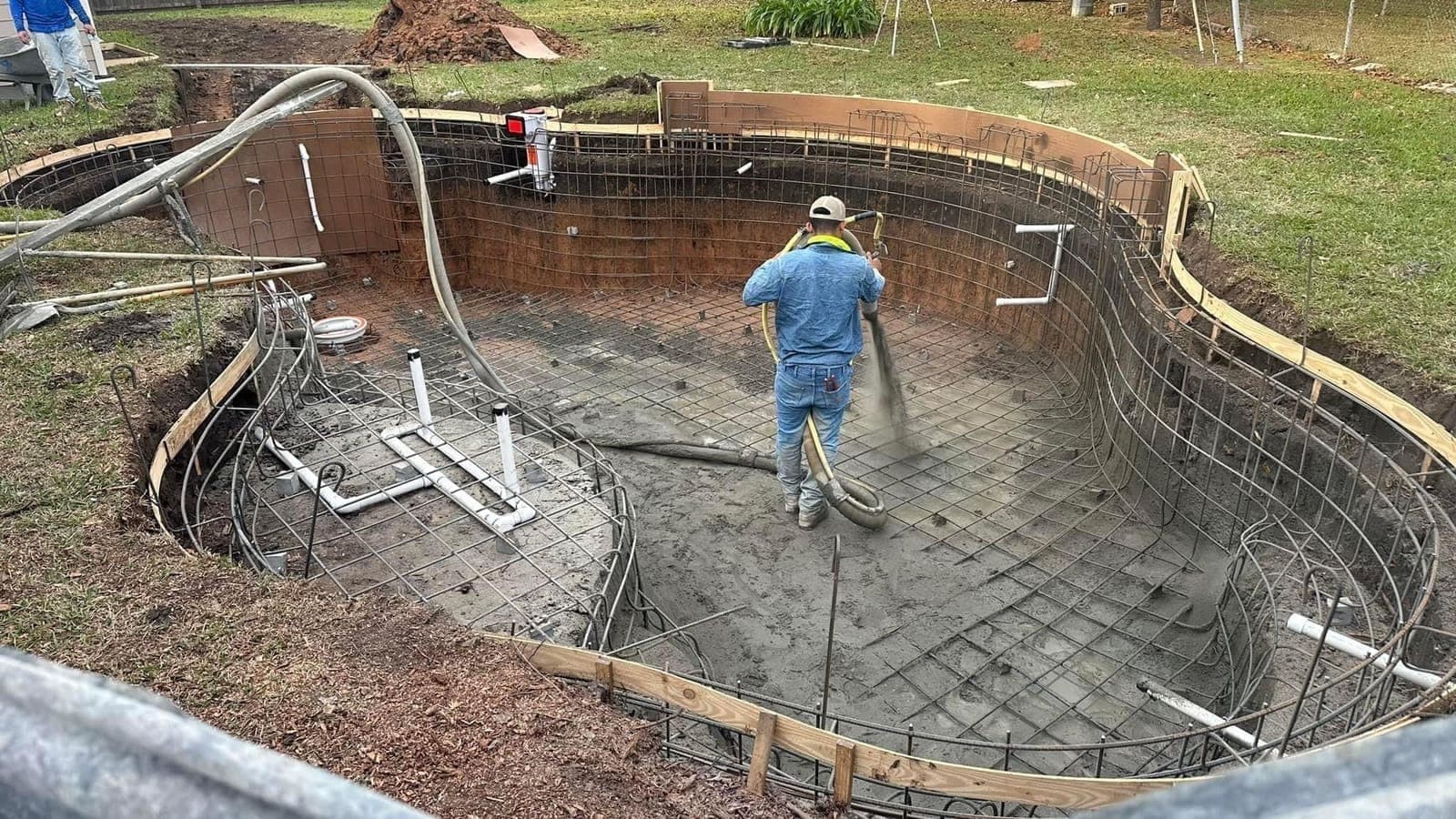
| Structural cracks | Thin or poorly placed steel, or a shell not engineered for expansive clay movement | Correct rebar coverage and an engineered, monolithic shell that moves as one piece |
| Cold-joint leaks | The pour stopped and restarted, leaving a seam | A continuous pour with no cold joints |
| Surface spalling | Rushed or skipped curing, then saturation and a freeze | Full curing to structural strength before the pool is finished and filled |
| Pool "popping" after a flood | High groundwater lifts an empty pool with no pressure relief | A hydrostatic relief valve and the weight of a concrete shell |
| Freeze damage | Water left in plumbing, tile, or equipment freezes and expands | Proper winterization; the structural shell itself rarely freezes through |
Freezes: what the 2021 storm actually broke
Winter Storm Uri in February 2021 gave the Gulf Coast days of hard freeze that the region is not built for. The pools that were damaged mostly did not lose the shell. What broke was water sitting in places it should not have been during a freeze: plumbing lines, pumps and filters, tile, and coping, where freezing water expands and cracks whatever contains it. The structural gunite shell is a thick, reinforced mass and rarely freezes through. The lesson from Uri was about winterizing the plumbing and equipment, not about the concrete.
Hurricanes and floods: pressure, not wind
Wind is not what threatens a pool in a hurricane. Water is. When a storm like Harvey drops enough rain to raise the water table, the ground around a pool becomes saturated and the hydrostatic pressure underneath it climbs. An empty or lightly built pool can literally be pushed up out of the ground. A properly built gunite pool resists this two ways: its own concrete weight, and a hydrostatic relief valve that lets rising groundwater bleed off instead of lifting the shell. The single worst thing you can do during a Gulf Coast flood is drain your pool, which removes the weight holding it down exactly when the ground pressure is highest.
How to protect any pool on the Gulf Coast
- Do not drain the pool before a flood or hurricane — the water weight is what keeps it in the ground.
- Winterize before a hard freeze: run the equipment or drain the lines, and protect exposed plumbing.
- Keep the pool full and balanced; a saturated, empty shell is the most vulnerable state.
- For a new build, make sure the shell is engineered for expansive clay, poured continuously, and fully cured before finishing.
- For an aging pool, have structural cracks looked at early — a small repair on a sound gunite shell is routine.
None of this is about selling you a pool. It is the difference between a shell that lasts five decades on the Gulf Coast and one that has problems in five years, and almost all of that difference is decided by how the shell was built and how it is cared for through the seasons. That is the part we have spent 20 years getting right here.
Frequently asked questions
Do gunite pools crack in Houston clay soil?
A properly built, steel-reinforced gunite pool is highly resistant to clay-soil movement. When a shell does crack, the cause is almost always a construction shortcut — inadequate rebar, a cold joint from an interrupted pour, or a shell not engineered for expansive soil — not the concrete itself. Expansive clay is the main load a Gulf Coast pool must be engineered for, and a monolithic gunite shell built to take it holds up well.
Should I drain my pool before a hurricane or flood?
No. Draining a pool before a flood removes the water weight that holds it in the ground, and rising groundwater can then push the empty shell up and out of the earth. Keep the pool full, and rely on the hydrostatic relief valve a properly built pool has to bleed off ground pressure.
Did the February 2021 freeze damage pool shells?
Mostly not. During Winter Storm Uri, the damage was overwhelmingly to plumbing, pumps, filters, tile, and coping — places where standing water froze and expanded. The thick, reinforced structural gunite shell rarely freezes through. The takeaway was to winterize the plumbing and equipment, not that the concrete failed.
What actually makes a Gulf Coast pool shell fail?
The short list: thin or poorly placed steel, a cold joint from a pour that stopped and restarted, rushed or skipped curing, and no engineering for expansive clay or groundwater pressure. Get the steel, a continuous pour, real curing, and proper drainage right, and a gunite shell resists Houston's soil, freezes, and floods for decades.
Planning a gunite pool on the Gulf Coast?
We have shot shells across Houston to Beaumont for over 20 years. Get a free, no-pressure estimate.