Gunite Guide
The Complete Glossary of Gunite and Shotcrete Terms
July 14, 2026 · 7 min read
Talk to a gunite crew for five minutes and you will hear a dozen words most people never use. None of it is meant to confuse you, but knowing the vocabulary makes it far easier to ask a contractor the right questions and understand the answers. Here is the plain-English glossary, grouped by what each term describes.
Materials and methods
| Term | What it means |
|---|---|
| Gunite | The dry-mix method of pneumatically applied concrete: a dry blend of cement and sand is sent through a hose and water is added at the nozzle as it is sprayed. |
| Shotcrete | The wet-mix method: the concrete is fully mixed with water before it is pumped and sprayed. Same idea as gunite, water added at a different stage. |
| Pneumatically applied concrete | The umbrella term for both gunite and shotcrete — concrete placed by spraying it through a hose at high pressure rather than pouring it. |
| Dry mix / wet mix | The two ways to place sprayed concrete. Dry mix (gunite) adds water at the nozzle for control; wet mix (shotcrete) is premixed for speed. |
| Water-cement ratio | The proportion of water to cement in the mix. Too much water weakens the concrete. Controlling it is one of the biggest factors in shell strength. |
| Plaster | The interior finish coat applied over the cured shell. It is the surface you see and touch, and it is renewed over the life of the pool. |
The shell and its structure
| Term | What it means |
|---|---|
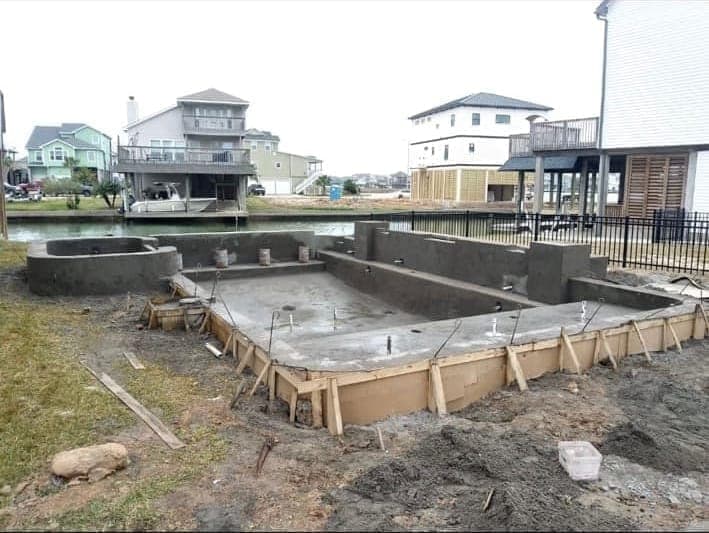
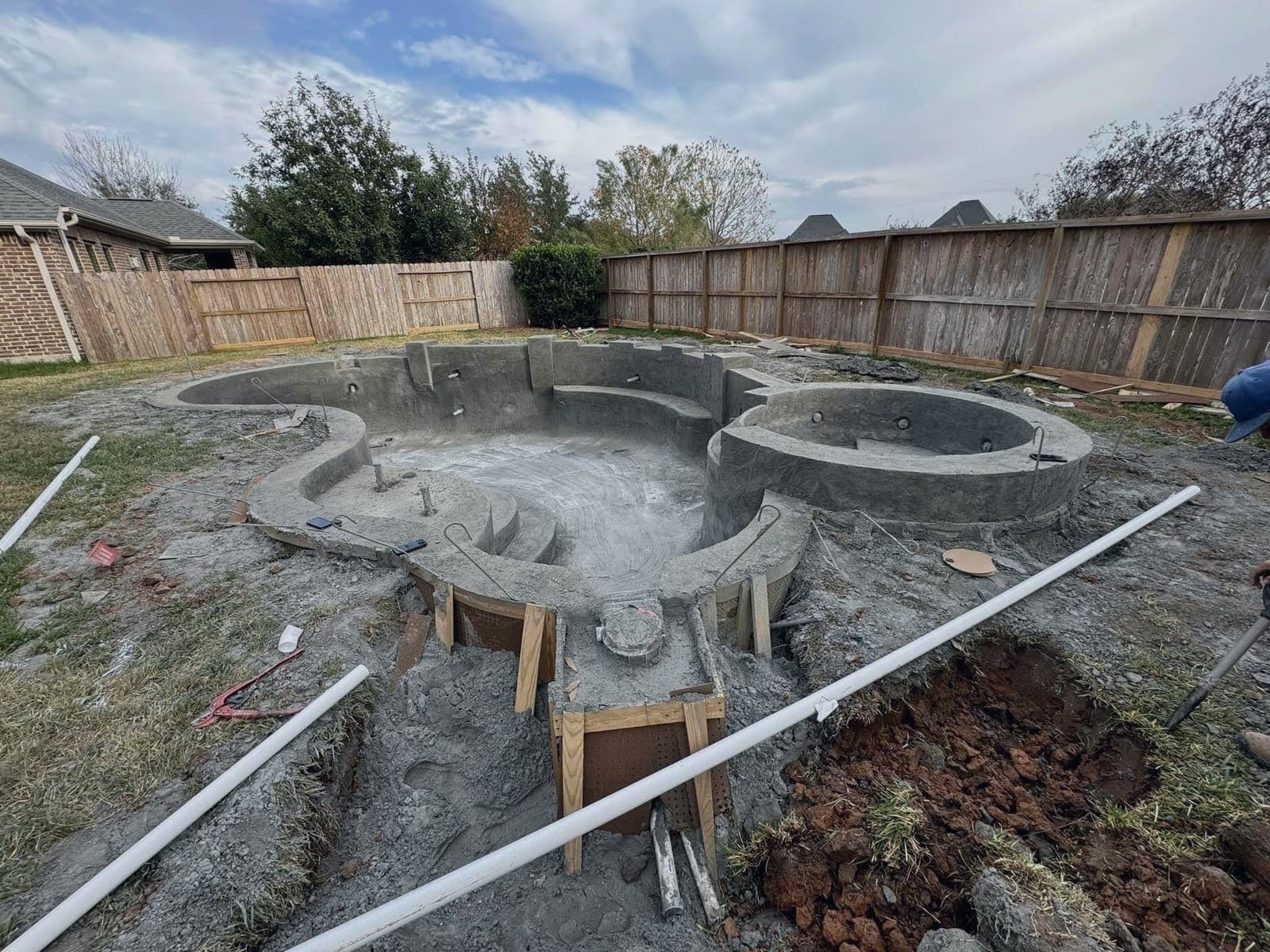
| Shell | The structural concrete body of the pool — the floor and walls that everything else is built on. The one part of a pool you cannot redo without major work. |
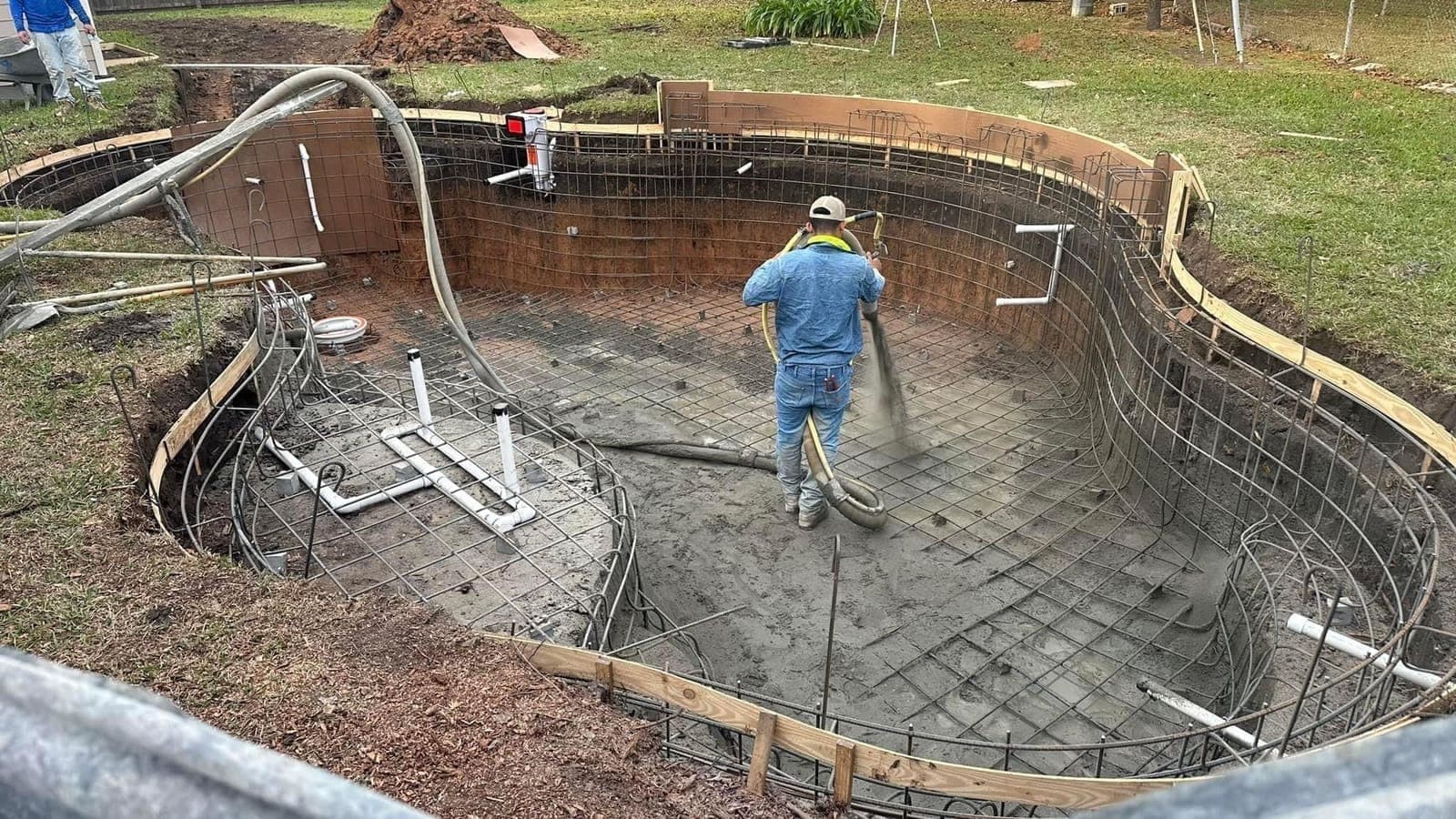
| Rebar | The steel reinforcing bar tied into a grid inside the shell before spraying. It gives the concrete its tensile strength and holds the structure together. |
| Bond beam | The thickened, reinforced top edge of the pool wall that ties the shell together and supports the coping and deck around the rim. |
| Tanning ledge | A shallow shelf built into the shell, usually a few inches of water, for lounging or chairs. Also called a sun shelf or Baja shelf. |
| Raised spa | A spa built above the waterline as part of the same shell, often spilling into the pool. Hand-carved into the gunite as the shell goes up. |
| Coping | The capping material around the top edge of the pool that covers the bond beam and forms the transition to the deck. |
The crew and the process
| Term | What it means |
|---|---|
| Nozzleman | The operator who controls the spray nozzle and places the concrete. On a dry-mix gunite job the nozzleman also controls the water. The most skill-dependent job on the crew. |
| Continuous pour | Shooting the entire shell in one uninterrupted session so the concrete bonds as a single monolithic structure with no seams. |
| Curing | The controlled process of keeping the fresh shell moist so the concrete reaches full structural strength. Rushed curing is one of the most common causes of a weak shell. |
| Hydration | The chemical reaction between cement and water that hardens concrete. Proper curing keeps hydration going long enough to reach full strength. |
| Hydrostatic relief valve | A valve in the pool floor that lets rising groundwater bleed into the pool instead of lifting the shell out of the ground during floods. |
Quality and failure terms
| Term | What it means |
|---|---|
| Rebound | Material that bounces off the surface during spraying instead of sticking. Good crews clear rebound so it does not get trapped and weaken the shell. |
| Cold joint | A weak seam that forms when a pour stops and restarts and the concrete has begun to set. A common source of leaks. Avoided with a continuous pour. |
| Spalling | Flaking or chipping of the concrete surface, often from saturation followed by a freeze, or from rushed curing. |
| Cure strength | The compressive strength the concrete reaches after proper curing, measured in psi. It is what determines how much load and movement the shell can take. |
| Monolithic | Built as one continuous piece with no structural seams. A monolithic shell moves as a single unit, which is what makes it resistant to soil movement. |
That is the vocabulary behind almost every gunite conversation. If a contractor uses a term you do not recognize, ask — the good ones are happy to explain, because a shell built right is a shell they are proud of. The four questions worth asking any crew come straight out of this list: do you shoot a continuous pour, how do you clear rebound, what is your curing procedure in Houston heat, and how experienced is the nozzleman.
Frequently asked questions
What is a bond beam on a pool?
The bond beam is the thickened, steel-reinforced top edge of the pool wall. It ties the shell together at the rim and supports the coping and deck. It is one of the structural elements a nozzleman hand-shapes as the gunite shell is sprayed.
What is rebound in gunite?
Rebound is the material that bounces off the surface during spraying instead of sticking to it. A skilled crew clears rebound as they work so it does not get trapped in the shell, where it would create weak spots. How a contractor handles rebound is a good indicator of shell quality.
What is a cold joint?
A cold joint is a weak seam that forms when a concrete pour stops and restarts after the first layer has begun to set, so the two placements never fully bond. Cold joints are a common source of pool leaks, and they are avoided by shooting the shell in one continuous pour.
What does a nozzleman do?
The nozzleman operates the spray nozzle and places the concrete on a gunite or shotcrete job. On a dry-mix gunite shell, the nozzleman also controls the water added at the nozzle, which makes it the most skill-dependent role on the crew and a major factor in the quality of the finished shell.
Planning a gunite pool on the Gulf Coast?
We have shot shells across Houston to Beaumont for over 20 years. Get a free, no-pressure estimate.