Gunite Guide
Gunite vs. Shotcrete vs. Fiberglass vs. Vinyl: The Complete Pool Comparison
July 14, 2026 · 10 min read
Almost every pool comparison online is written by a company that sells one type of pool. A fiberglass dealer's "gunite vs. fiberglass" page always ends with fiberglass winning. That is the problem with the question, not the answer. We build gunite and shotcrete shells and nothing else, so we have no reason to talk you out of fiberglass or vinyl if that is the right pool for you. Here is the honest version.
First, a quick clarification, because the words get mixed up. Gunite and shotcrete are both sprayed structural concrete — they are two ways of placing the same kind of shell, and for this comparison they are the same category: a concrete pool. The real decision most homeowners are weighing is concrete versus fiberglass versus a vinyl liner. Those are genuinely different products.
The three pool types in one paragraph each
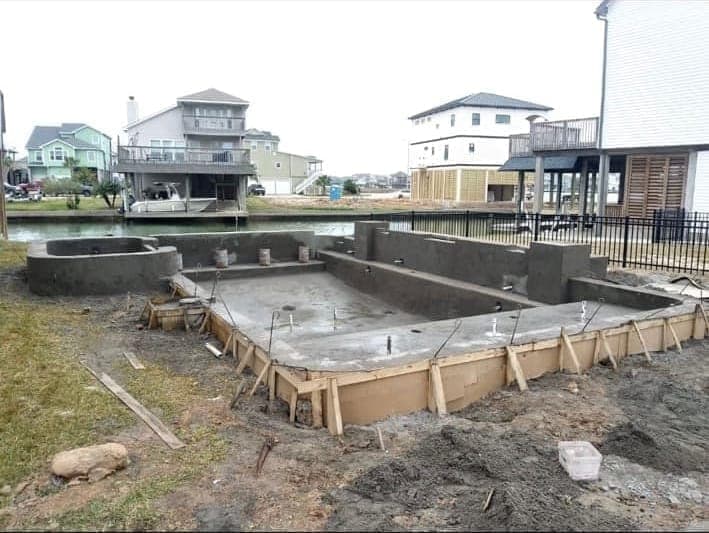
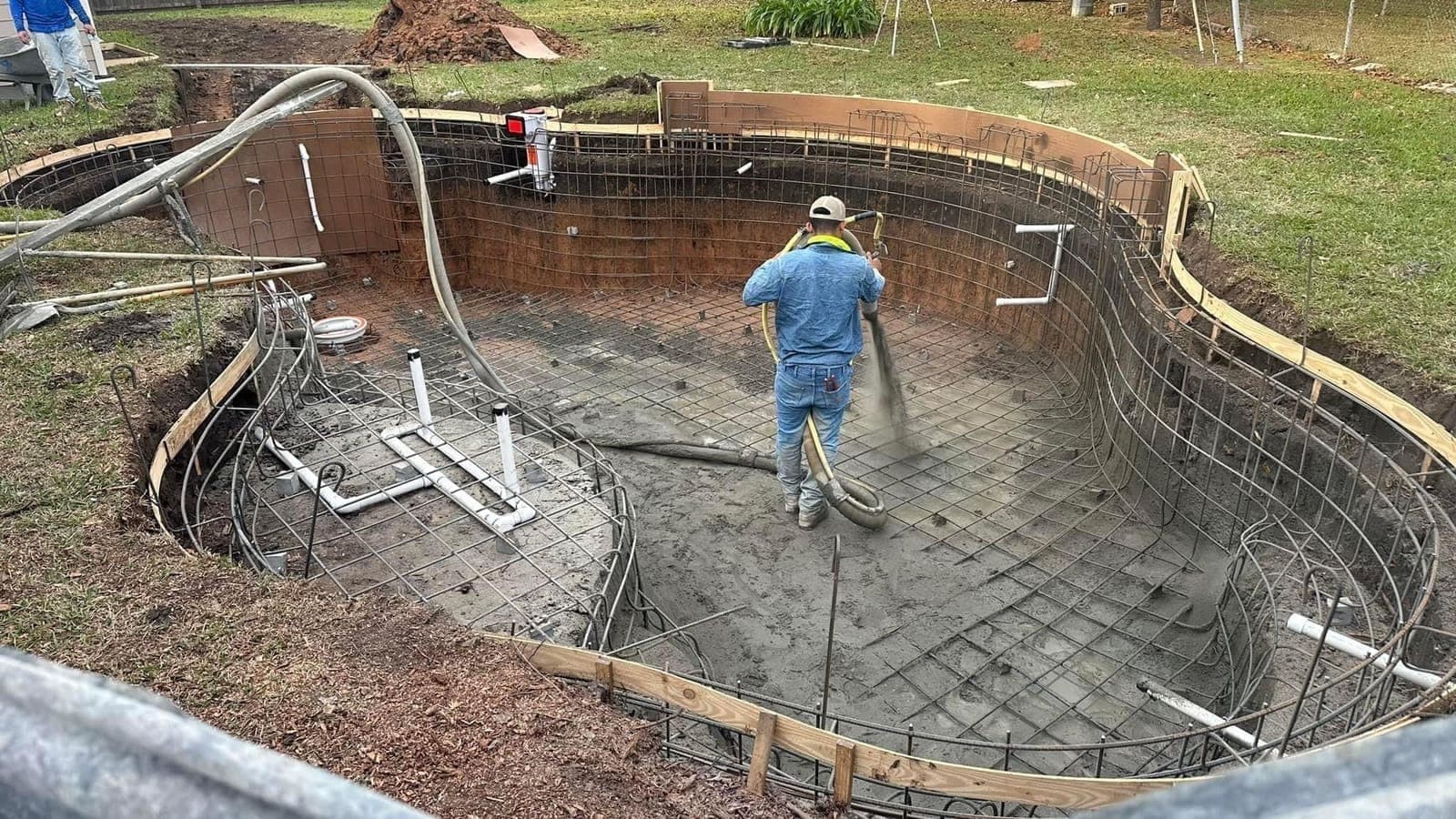
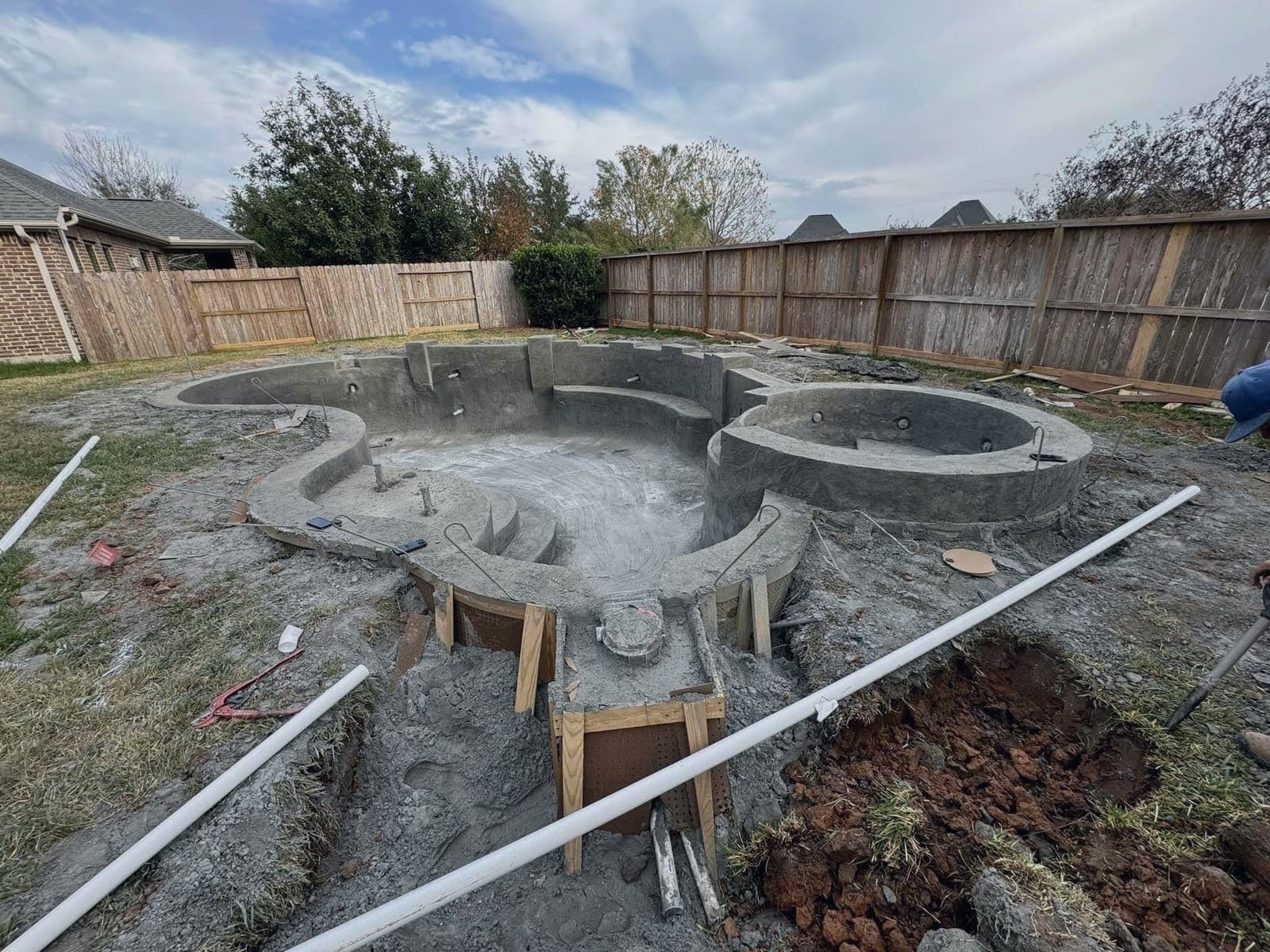
A concrete (gunite or shotcrete) pool is sprayed on site over a steel-reinforced frame, then finished with plaster, aggregate, or tile. Because it is built in place rather than dropped in, it can be any shape, size, or depth you can draw. It is the most durable in-ground pool you can build, and the most customizable.
A fiberglass pool is a one-piece shell molded in a factory and delivered on a truck, then set into a prepared hole. Installation is fast and the surface is smooth, but you are limited to the manufacturer's molds and to shells narrow enough to travel by road, which caps the size and the shapes available.
A vinyl-liner pool is a frame of steel or polymer walls with a vinyl sheet stretched over the interior and floor. It is the lowest upfront cost of the three. The liner is a wear item that gets replaced on a cycle, and shapes and depths are more limited than concrete.
The comparison at a glance
| Factor | Concrete (gunite/shotcrete) | Fiberglass | Vinyl liner |
|---|---|---|---|
| Build time | Longer (weeks of shell, cure, and finish work) | Shortest (shell arrives pre-made) | Short to moderate |
| Upfront cost | Highest | Middle | Lowest |
| Shell lifespan | Decades; interior finish resurfaced periodically | Roughly 20–30 years | Walls last; liner replaced on a cycle |
| Customization | Unlimited shape, size, depth, and features | Limited to factory molds and road-legal size | Mostly geometric, limited depth and features |
| Surface | Plaster/aggregate/tile; renewable | Smooth gelcoat; hard to color-match repairs | Smooth vinyl; can tear or wrinkle |
| Repairability | Fully repairable, resurfaceable, and re-shellable | Gelcoat repairs possible; blistering a known issue | Liner is replaced rather than repaired |
| Best fit | A permanent, custom pool built to last | A fast, low-maintenance standard shape | The lowest entry price |
Cost: what you are really comparing
Concrete carries the highest upfront price, fiberglass sits in the middle, and vinyl is usually the cheapest to install. But upfront price is only half of the number that matters. A vinyl liner is a consumable — budget for a replacement every several years, plus the water and chemistry to protect it. Fiberglass avoids the liner cost but is capped on size and shape, and a damaged gelcoat is genuinely hard to make invisible. A concrete shell costs the most to build and its plaster interior gets resurfaced over the years, but the structure itself can outlast everything around it. Over a 25-year horizon the gap narrows a lot, and for many owners the concrete pool is the one still standing at the end of it. For real Houston numbers on the concrete side, our shell-cost guide walks through what drives the price.
Lifespan and durability
This is where concrete separates itself. A properly built, steel-reinforced gunite shell is a rigid, monolithic structure, and on the Texas Gulf Coast that rigidity matters — expansive clay soil moves, and a well-engineered concrete shell is built to take it. Fiberglass shells are durable but can develop surface blistering over time and are vulnerable during droughts or floods when ground movement and water tables work against a comparatively light shell. Vinyl liners are the shortest-lived component of any pool and are punctured or torn more easily. None of this means fiberglass or vinyl are bad pools. It means concrete is the one you build when you want the structure to be permanent.
Customization
If you want a specific shape, a vanishing edge, a beach entry, a deep end for diving, an integrated raised spa, a grotto, or a rock waterfall, concrete is effectively the only option that says yes to all of it. Fiberglass gives you the manufacturer's catalog of shapes up to a road-legal size. Vinyl is mostly rectangles and simple geometrics. For a backyard where the pool is the centerpiece and the design is the point, a sprayed concrete shell is what makes it buildable.
Maintenance, honestly
This is the one category where concrete does not automatically win. A plaster interior is slightly porous, so it takes a little more brushing and chemistry than a smooth fiberglass gelcoat, and it gets resurfaced over the life of the pool. Fiberglass is the lowest-maintenance surface of the three. Vinyl is smooth but the liner has to be protected from bad water chemistry and physical damage. If absolute minimum maintenance is your top priority and a standard shape works for you, that is a fair reason to look hard at fiberglass. If you want the durable, fully custom pool and you are fine with normal upkeep, concrete is the pick.
So which should you build?
- Choose concrete (gunite/shotcrete) if you want a fully custom, permanent pool and you are building for the long term. It is the most durable and the most flexible.
- Choose fiberglass if you want a fast install, a smooth low-maintenance surface, and a standard shape and size work for you.
- Choose a vinyl liner if the lowest upfront price is the deciding factor and you accept replacing the liner on a cycle.
We are a concrete shell company, so of course we believe in the concrete pool. But the honest truth is that all three build a swimming pool, and the right one depends on your budget, your yard, and how long you plan to keep it. If you have decided on a custom concrete pool anywhere from Houston to Beaumont, that is the part we do, and we are glad to talk it through.
Frequently asked questions
Is a gunite pool better than a fiberglass pool?
It depends on what you want. A gunite (concrete) pool is more durable and fully customizable in shape, size, and depth, but costs more upfront and takes longer to build. A fiberglass pool installs faster and has a lower-maintenance surface, but you are limited to factory shapes and road-legal sizes. For a custom, permanent pool, concrete wins; for a fast, standard-shape install, fiberglass is a strong option.
Which pool type lasts the longest?
A properly built, steel-reinforced concrete (gunite or shotcrete) shell lasts the longest — decades, with the plaster interior resurfaced periodically. Fiberglass shells typically last around 20 to 30 years. Vinyl-liner pools have durable walls, but the liner itself is a wear item replaced on a cycle.
Why is a gunite pool more expensive?
A gunite pool is engineered and built on site: excavation, steel, a sprayed structural shell, curing, and a finish. That labor and permanence cost more than a pre-molded fiberglass shell or a vinyl liner. In exchange you get unlimited customization and the most durable structure of the three.
Are gunite and shotcrete the same thing for this comparison?
Yes. Gunite (dry mix) and shotcrete (wet mix) are two ways of placing sprayed structural concrete over a steel frame. Both create a concrete pool shell. The bigger decision for most homeowners is concrete versus fiberglass versus a vinyl liner, not gunite versus shotcrete.
Planning a gunite pool on the Gulf Coast?
We have shot shells across Houston to Beaumont for over 20 years. Get a free, no-pressure estimate.