Gunite Guide
Why Proper Gunite Curing Matters (and Common Mistakes)
June 6, 2026 · 6 min read
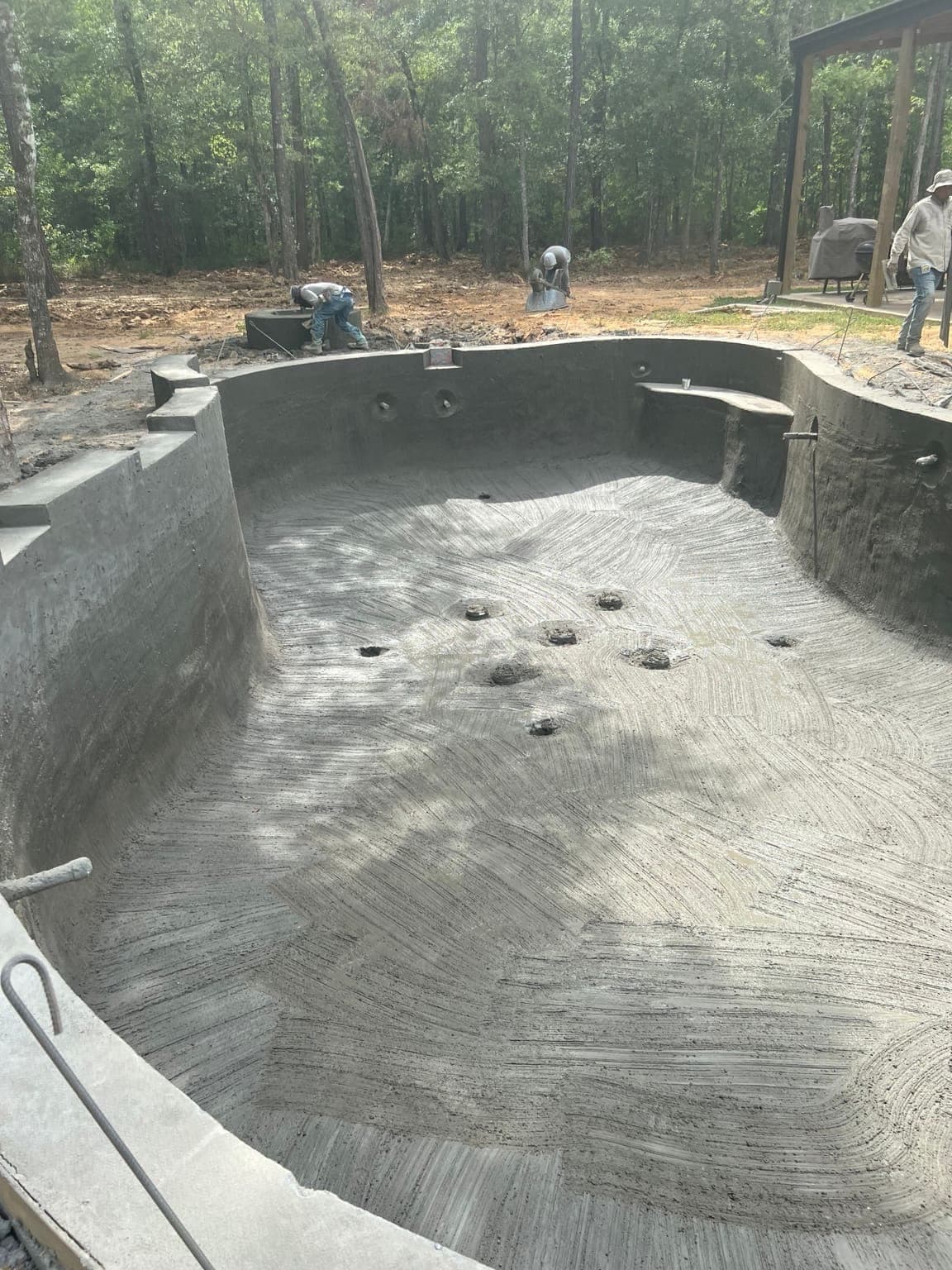
Gunite gets the attention, but curing is what turns fresh concrete into a shell that lasts decades. It is also the easiest step to rush, which is why it is behind so many pool problems down the road.
What curing actually is
Concrete does not get strong by drying out. It gets strong through hydration, a chemical reaction between cement and water that continues for days after placement. Curing means keeping the fresh shell moist long enough for that reaction to finish. Done right, the concrete reaches its full design strength. Done wrong, it never gets there.
Why it matters even more on the Gulf Coast
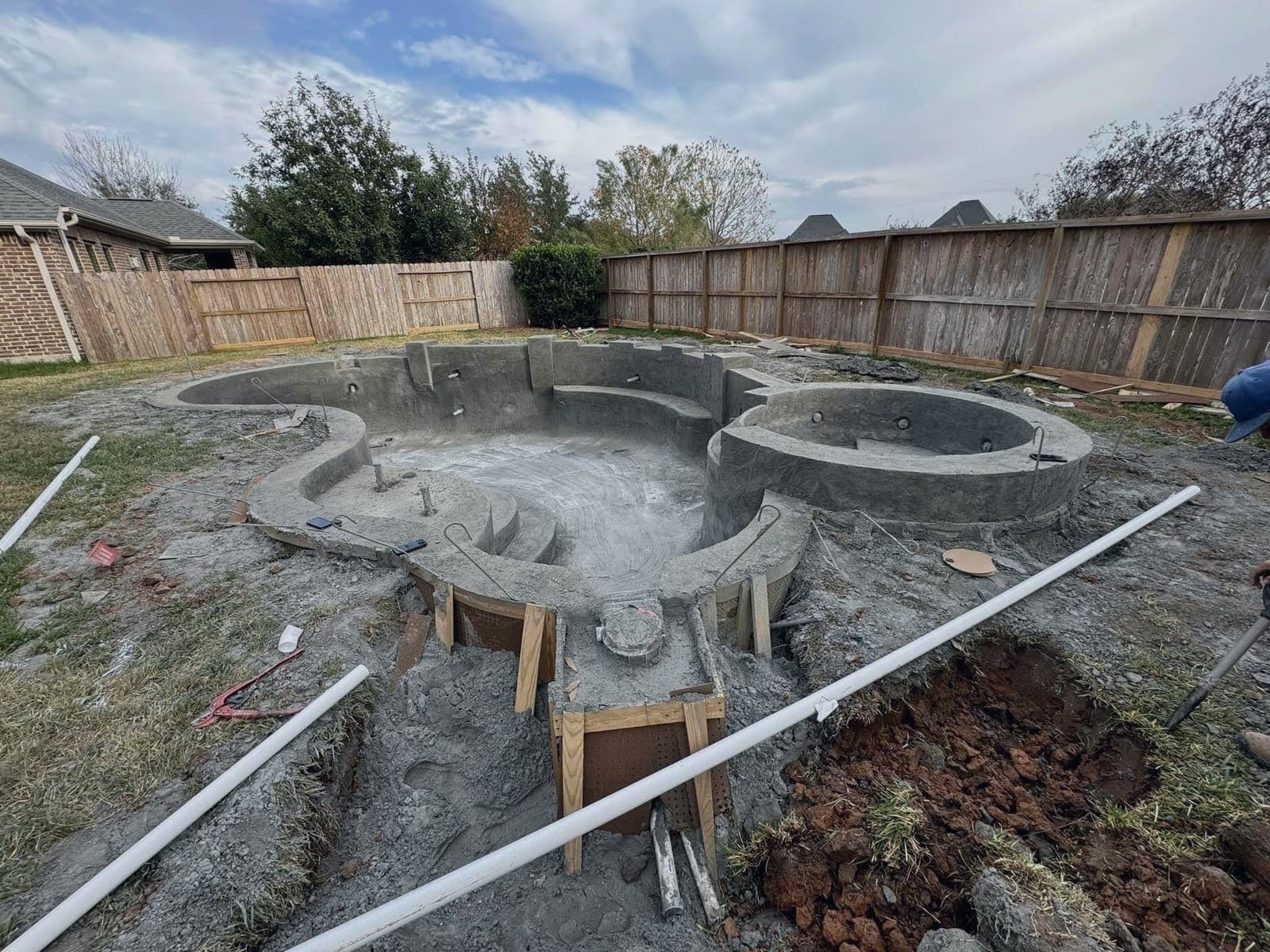
Heat, sun, and wind pull moisture out of fresh concrete fast. In the Houston and Gulf Coast climate, a shell left to dry too quickly can lose strength and develop surface cracking before it ever holds water. Proper curing, usually a water cure, keeps the shell hydrated through the critical early days.
Common curing and placement mistakes
- Skipping or shortening the cure to move to the next job
- Too much water added at the nozzle, which weakens the mix
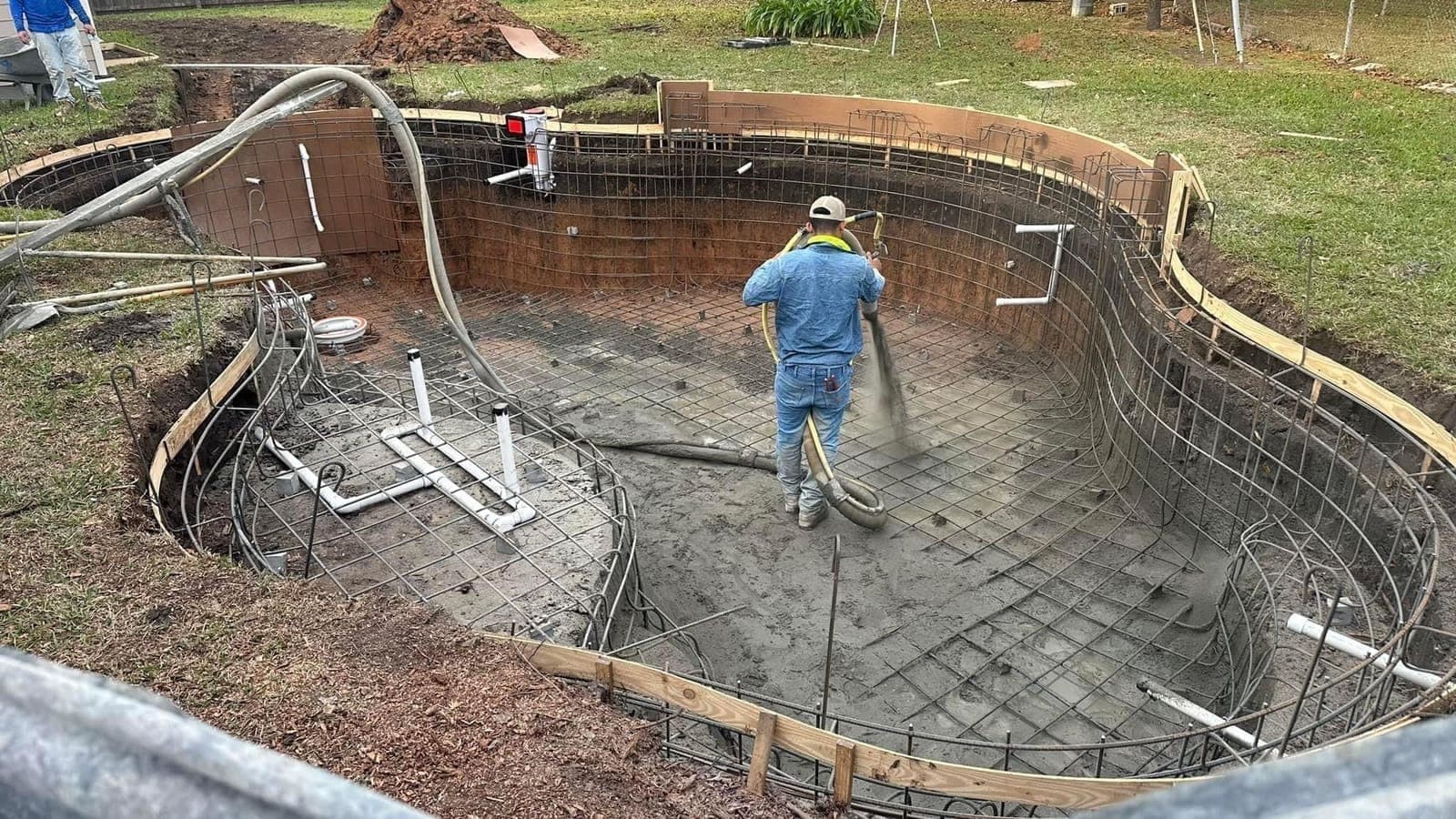
- Rebound, the material that bounces off, getting trapped in the shell
- Cold joints from stopping and restarting the pour
- Thin coverage that leaves steel too close to the surface
How it should be done
A quality shell starts with a continuous pour at the right water ratio, with rebound cleared and steel fully encased. Then it is cured deliberately, kept moist so it gains real strength. None of this is visible in the finished pool, which is exactly why it is worth choosing a crew that takes it seriously. After more than 20 years on the Gulf Coast, this is the part we never cut.
Frequently asked questions
How long should a gunite shell cure?
Concrete gains most of its early strength over the first week and continues to strengthen for weeks after. The shell is kept moist through the critical early days rather than left to dry out in the sun.
Can I fill the pool right after the gunite is shot?
Filling is part of the process and is timed to support curing, not rushed. Your builder will direct when and how, based on the shell and the finish schedule. The shell should not simply be left to dry out.
What happens if curing was skipped or rushed?
Poorly cured concrete can fall short of its design strength and is more prone to surface cracking and long-term wear. Because the shell is hard to access later, getting curing right the first time is critical.
Planning a gunite pool on the Gulf Coast?
We have shot shells across Houston to Beaumont for over 20 years. Get a free, no-pressure estimate.