Gunite Guide
How to Choose a Gunite Subcontractor in Houston
July 30, 2026 · 8 min read
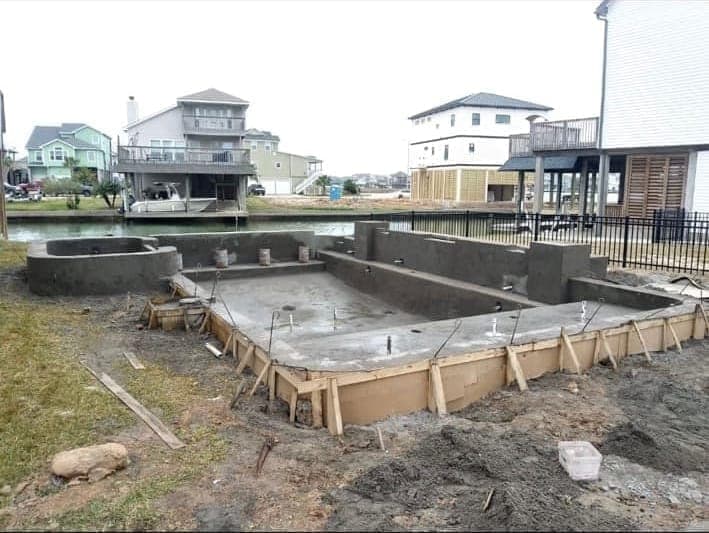
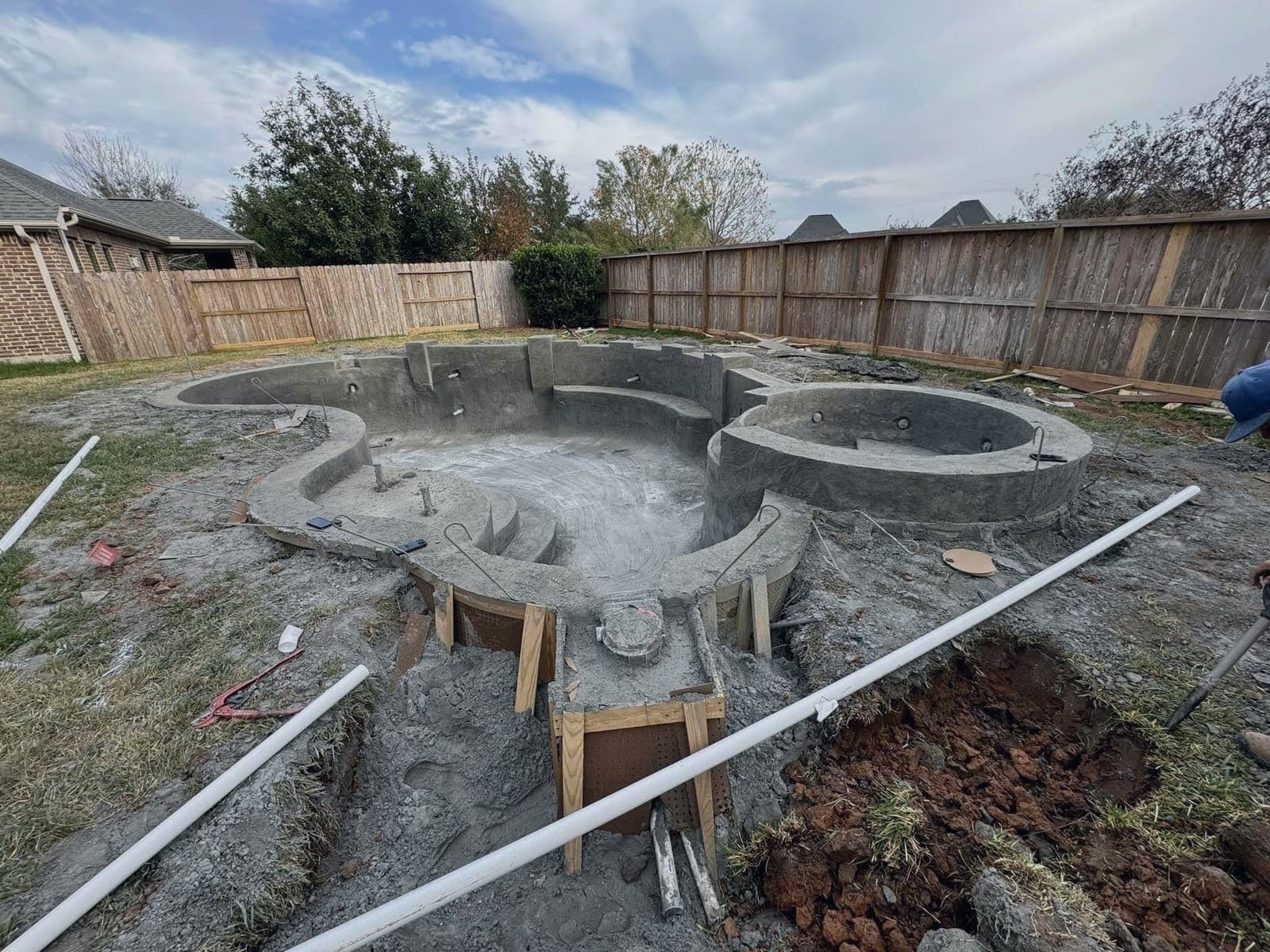
If you build pools in Houston, the gunite sub is the highest-leverage vendor on your list and the hardest one to evaluate. Every other trade leaves work a customer can inspect. The shell disappears under plaster and never gets looked at again, so the only feedback you ever get on the crew is the callback you get three years later. That asymmetry is why price shopping the shell is such an expensive habit.
We are a gunite sub, so treat this as a biased source and check every claim in it. But these are the questions that actually separate crews, and any sub worth hiring will answer them without getting defensive.
Ask how they handle rebound
Rebound is the material that bounces off the surface during placement. It has lost cement paste and aggregate on the way back, so it is weaker than the mix that stuck. A crew that lets rebound accumulate in the deep end, behind the steel, or in the bench and step corners has built weak zones into a shell that looks perfect. Ask directly how they clear it and who is responsible for it. A crew with a real answer has thought about it. A crew that shrugs has not.
Ask about water at the nozzle
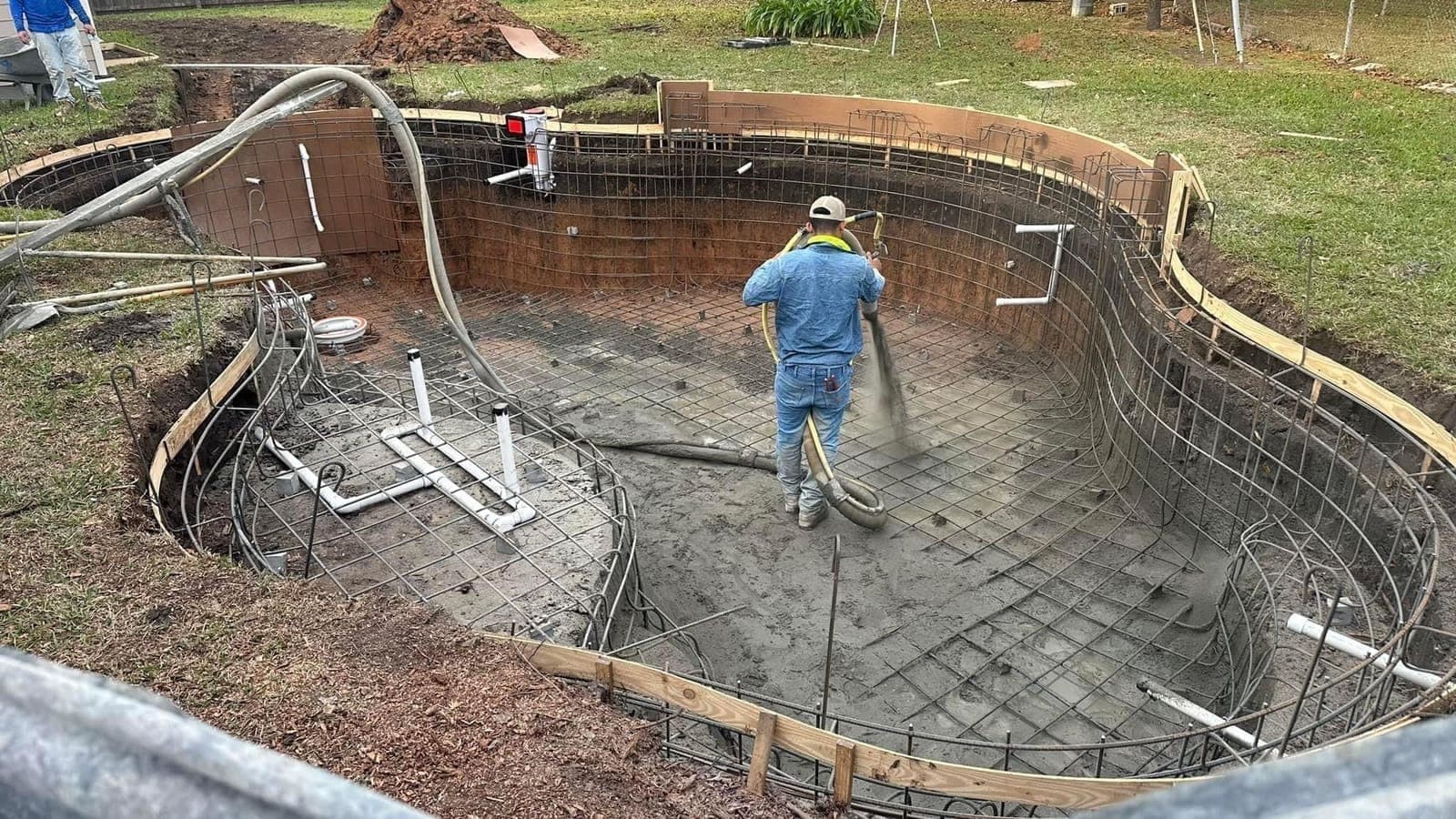
In dry-mix gunite, the nozzleman controls the water. More water makes the material easier to place and easier to trowel, and it makes the concrete weaker. This is the single biggest quality variable on the job and it lives entirely in the hands of one person. Ask who runs the nozzle, how long they have run it, and whether it is the same person every time. Consistency at the nozzle is most of what you are buying.
Ask about steel coverage
Rebar needs to be fully encased with enough concrete over it, and the amount is on the engineer's plan for a reason. Steel that sits too close to the surface is where rust stains, spalling and structural problems start, and it is invisible the moment the shell is troweled. A good crew talks about coverage without being prompted.
Ask what happens to the cure
Concrete gains strength through hydration, not by drying. On the Gulf Coast, heat, sun and wind pull moisture out of a fresh shell fast, and a shell that dries instead of curing never reaches its design strength. Find out what the sub does after the pour, whose job the water cure is, and how that is handed off between your trades. Curing is the step most often lost in the gap between subcontractors, which is exactly why it needs an owner.
Ask how they handle a continuous pour
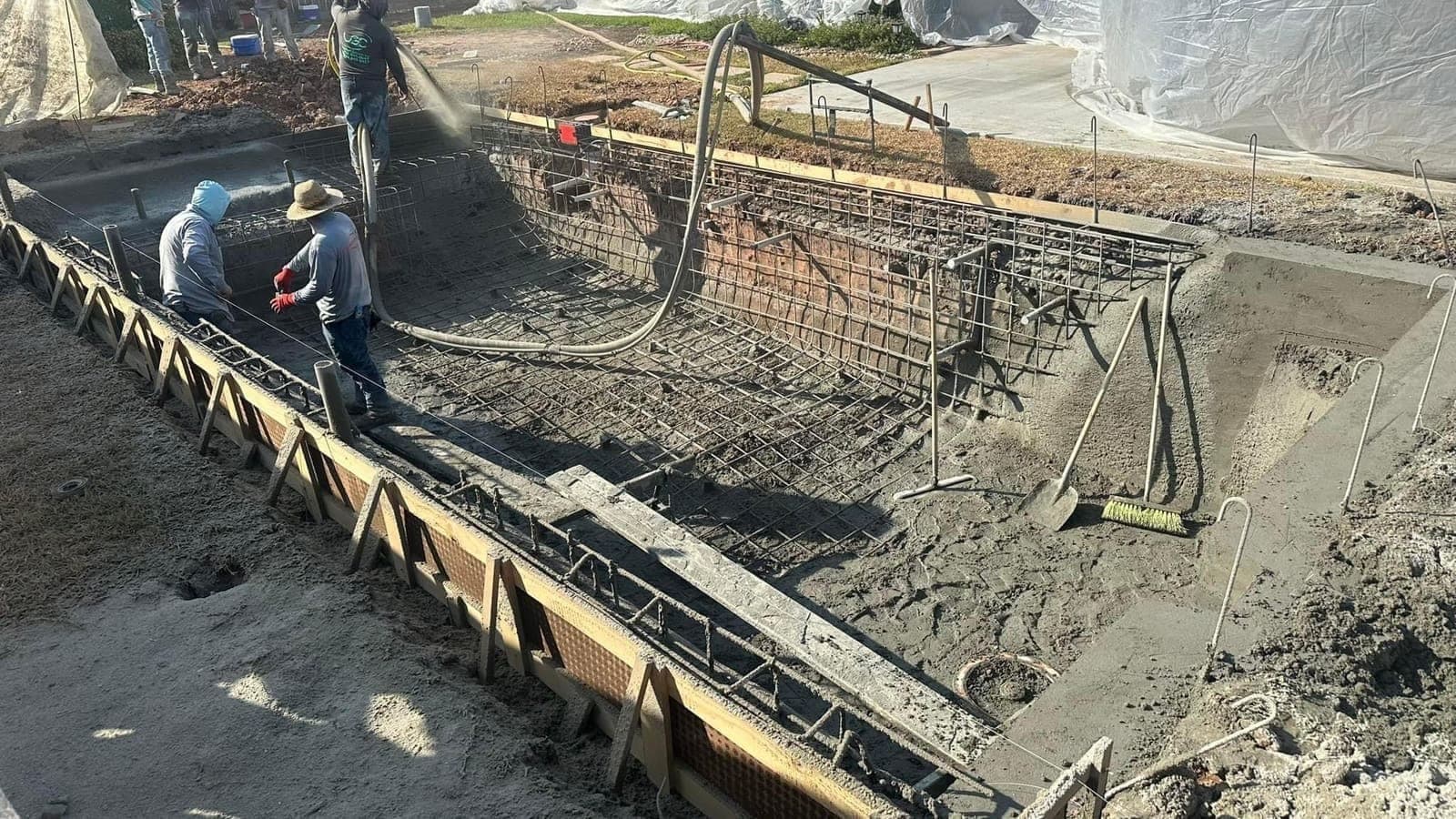
A shell shot in one continuous placement is monolithic. Stopping and restarting creates a cold joint, a plane where the new material never fully bonded to the old, and cold joints are where leaks show up later. Sometimes a stop is unavoidable. What matters is whether the crew plans the pour to avoid it and knows how to treat a joint properly when there is one.
Look at what the reviews are about
Review counts are easy to compare and mostly tell you how long a company has been collecting them. What the reviews say is more useful. For a shell crew, look for mentions of showing up on the scheduled day, cleaning the site, and communicating when something changed, because those are the things a builder feels every week. A single bad review is noise. A pattern of no-shows is a schedule you are about to inherit.
Watch the access conversation
Access drives more of a gunite job than most people expect: how the rig gets close enough, how far the hose has to run, whether a fence comes down, whether the neighbour's driveway is in play. A sub who asks detailed access questions before quoting is a sub who has been burned by not asking, and their number is far more likely to hold. A sub who quotes off dimensions alone will be renegotiating on the day.
Price the callback, not the pour
The gap between the cheapest shell bid and the most careful one is usually small next to the cost of one structural callback: the diagnosis, the demolition through finished decking, the re-shoot, the re-plaster, and the customer you lose in the middle of it. The shell is not where the margin is. It is where the risk is.
If you are looking for a gunite sub anywhere from Katy to Beaumont, this is the work we do, and we are happy to answer every question above about our own crew.
Frequently asked questions
What should a pool builder ask a gunite subcontractor before hiring them?
Ask how they clear rebound, who runs the nozzle and how experienced they are, how they hit the steel coverage on the engineer's plan, whose job the water cure is after the pour, and how they plan the placement to avoid a cold joint. Also ask detailed access questions early, because access affects the price more than almost anything else.
Why does the gunite subcontractor matter so much if the shell is hidden?
Because it is hidden. Every other trade leaves work the customer can inspect and complain about immediately. A weak shell gives no feedback until it leaks or cracks years later, by which point the repair runs through finished decking, tile and plaster. The crew that shoots the shell effectively sets how much of the warranty gets spent.
What is rebound in gunite, and why does it matter?
Rebound is material that bounces off the surface during placement. It has lost cement paste on the way back, so it is weaker than the material that stuck. If it accumulates behind steel or in corners instead of being cleared, it builds weak zones into a shell that looks finished.
How much does the nozzleman affect gunite quality?
A great deal. In dry-mix gunite the nozzleman controls how much water is added at the nozzle, and more water means easier placement but weaker concrete. It is the biggest single quality variable on the job, and it sits with one person, which is why consistency at the nozzle matters more than almost any other factor.
Planning a gunite pool on the Gulf Coast?
We have shot shells across Houston to Beaumont for over 20 years. Get a free, no-pressure estimate.