Gunite Guide
That Crack in Your Pool: Cosmetic or Structural?
July 31, 2026 · 8 min read
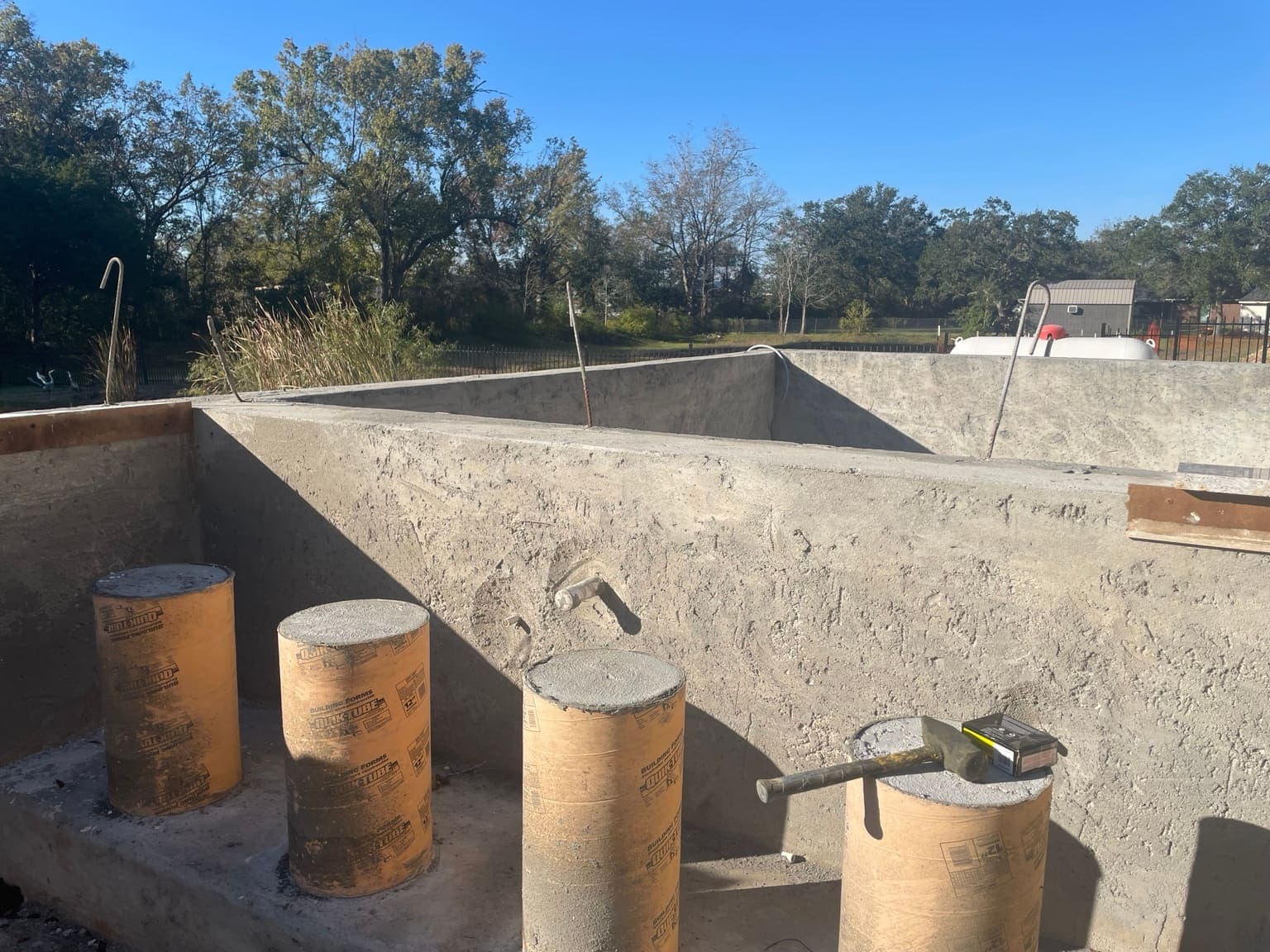
You noticed a line in the finish and now you cannot stop looking at it. The good news is that most cracks people find in a pool are in the plaster, which is a surface, not in the shell, which is the structure. The bad news is that the two can look similar from a lounge chair, and the response to each is completely different.
Here is how to read what you are looking at. And one warning first, because it is the mistake that turns a repair into a replacement.
Do not drain the pool to inspect it
This is the instinct, and on the upper Texas Gulf Coast it is a genuinely expensive one. The water table near the bay, the island and a lot of low-lying ground sits high, especially after a wet stretch. A pool full of water is heavy enough to stay put. An empty pool in saturated ground is a large hollow object with groundwater pressing up underneath it, and it can lift, crack or float out of position. That is not a repair, that is a new pool.
Pools have a hydrostatic relief valve in the floor for exactly this reason: it lets that pressure escape. It is also a part that people do not think about until the day it matters, and an old one may not be working. Draining a pool around here is something to do deliberately, with advice, at the right time of year, and usually not at all if the goal is just to look at a crack.
Crazing: the one that is almost never a problem
Fine, shallow, web-like lines across the plaster surface, often in a random pattern, sometimes only visible when the surface is wet or drying. This is crazing, also called check cracking. It is shrinkage in the plaster layer as it cured and aged, not movement in the shell underneath.
Crazing does not leak, does not spread structurally, and does not mean anything is wrong with the concrete. It is a cosmetic condition of an aging interior finish. If it bothers you, the fix is resurfacing when the finish is due anyway, not structural work.
Structural cracks: what actually makes one different
A structural crack goes through the shell, not just the finish. The signs are more specific than most articles admit, so here is what actually distinguishes one:
- It is a single defined line rather than a web or a random pattern.
- You can feel it with a fingernail. Crazing is usually too shallow to catch.
- It runs in a direction the structure explains: vertically down a wall, across a floor, or radiating from a corner, step, or a change in depth. Corners and transitions concentrate stress, which is why cracks start there.
- It continues past the plaster line, appearing on the deck, the bond beam, the tile line, or a raised wall.
- It is associated with water loss you can actually measure.
One of those alone is not a verdict. Several together is a reason to have someone look at it properly.
The bucket test settles the water-loss question
Before assuming a crack is leaking, find out whether the pool is losing water faster than evaporation, because in a Houston August evaporation alone is significant and easy to mistake for a leak.
Fill a bucket with pool water and set it on a step so the water inside and outside are at the same level. Mark both levels. Leave the pump running normally and wait twenty-four hours, ideally without rain. Evaporation acts on both, so if the pool has dropped more than the bucket, you are losing water somewhere. If they dropped the same, you have evaporation and a cosmetic crack.
Worth knowing: plumbing leaks are more common than shell leaks. A confirmed loss does not automatically mean the crack you are staring at is the culprit.
What causes structural cracking around here
Most of it comes back to ground and to how the shell was built.
- Soil movement. Expansive clay swells wet and shrinks dry, and it does that every year. A shell that was under-reinforced for the soil it sits in eventually shows it.
- Hydrostatic pressure. Groundwater pushing up under an empty or partly drained pool, or against a shell with a failed relief valve.
- Poor curing. Concrete that dried instead of curing never reaches its design strength, and it is more prone to cracking for the rest of its life.
- Rebound trapped in the shell. Material that bounced off during placement and was never cleared out, leaving a weak zone behind the steel or in a corner.
- Thin coverage over steel. Rebar too close to the surface, which shows up later as rust staining, spalling and cracking along the bar line.
- Freeze damage. Less common here than soil movement, but a hard Texas freeze on water sitting in plumbing or a partly empty shell does real harm.
Notice how many of those trace back to how the shell was originally shot and cured, years before anybody saw a crack. That is the whole argument for not shopping the shell on price.
What each one actually needs
| What you are seeing | What it usually is | What it needs |
|---|---|---|
| Fine web of shallow lines | Crazing in the plaster | Nothing urgent. Address at the next resurfacing. |
| Single line, catches a fingernail, no measured water loss | Possibly surface, possibly shell | Get eyes on it. Monitor whether it changes. |
| Line continuing onto deck, coping or bond beam | Structural, moving with the surrounding ground | Assessment before any cosmetic repair. |
| Confirmed water loss beyond evaporation | A leak, in the shell or the plumbing | Leak detection first, to find where before deciding what. |
| Rust staining or flaking along a line | Steel too close to the surface, corroding | Structural assessment. Patching the surface hides it, not fixes it. |
When it is the shell
A gunite shell is repairable, and a structural crack is not automatically the end of a pool. Depending on what caused it and how far it has gone, the work ranges from routing and sealing a defined crack, to structural patching with new steel tied in, to chipping out and re-shooting a section, to a full re-shell on a pool that has moved badly. The right answer depends on the cause, which is why diagnosis comes before repair. Sealing a crack that is still moving just means doing it again next year.
If you are somewhere between Houston and Beaumont and want someone to actually look at it rather than guess from a photo, that is work we do. And whatever you decide, leave the water in it until someone who knows the ground you are on tells you otherwise.
Frequently asked questions
Is a crack in my pool serious?
Most are not. Fine, shallow, web-like lines are crazing in the plaster surface, which is cosmetic and does not leak. A crack is more concerning when it is a single defined line you can catch with a fingernail, when it runs from a corner, step or depth change, when it continues onto the deck or bond beam, or when the pool is measurably losing water beyond evaporation.
Should I drain my pool to look at a crack?
No, and especially not on the Gulf Coast. Where the water table is high, an empty pool in saturated ground can lift, crack or float out of position because of the groundwater pressure underneath it. The water in the pool is what holds it down. Draining should be deliberate, timed, and taken on with advice, not done to inspect a crack.
How do I tell if my pool is actually leaking?
Use a bucket test. Fill a bucket with pool water, set it on a step so the levels inside and outside match, mark both, run the pump as normal and wait twenty-four hours without rain. Evaporation affects both equally, so if the pool level drops further than the bucket, you are losing water. Note that plumbing leaks are more common than shell leaks.
What is crazing in a pool?
Crazing, also called check cracking, is a fine web of shallow lines across the plaster surface caused by shrinkage in the finish as it cured and aged. It is a condition of the interior surface, not the concrete shell underneath. It does not leak and does not spread structurally, and it is normally addressed at the next resurfacing rather than repaired on its own.
What causes gunite pool cracks in Houston?
Mostly ground movement and how the shell was originally built. Expansive clay swells and shrinks with the seasons and stresses an under-reinforced shell. Hydrostatic pressure from a high water table stresses an empty or poorly drained one. Beyond soil, the common built-in causes are concrete that was not properly cured, rebound left trapped in the shell, and steel placed too close to the surface.
Can a cracked gunite pool be repaired?
Usually. Depending on the cause and severity, the work ranges from routing and sealing a defined crack, through structural patching with new steel tied in, to chipping out and re-shooting a section, to a full re-shell on a badly moved pool. Diagnosis comes first, because sealing a crack that is still moving only postpones it.
Planning a gunite pool on the Gulf Coast?
We have shot shells across Houston to Beaumont for over 20 years. Get a free, no-pressure estimate.